On November 6, 2025, IAB Tech Lab brought its flagship International Summit to London, gathering global leaders from across the ecosystem to tackle the most pressing challenges facing digital advertising. Many of the discussions included AI in some form, or other, and with an AI-focused event happening simultaneously on the floor below, the convergence of technology and advertising has never been more apparent.
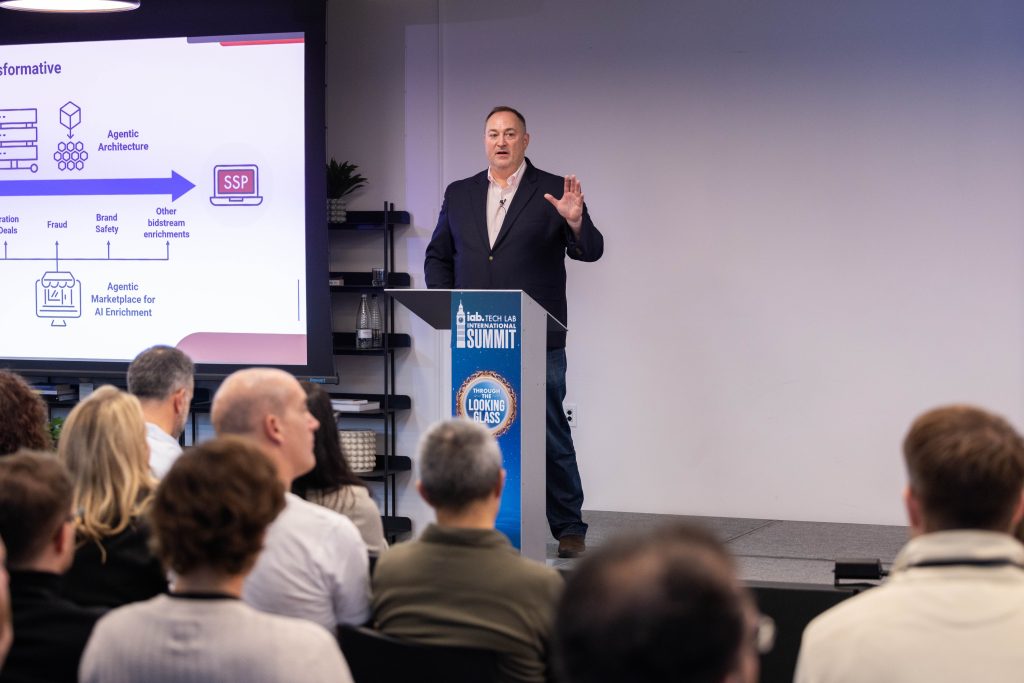
IAB Tech Lab CEO, Anthony Katsur, set the scene for the day in his keynote, covering key Tech Lab workstreams, such as the Trusted Server project, the CoMP initiative for helping publishers with LLMs, and Live Events with LEAP that would be covered during the day, as well as announcing the Agentic RTB Framework. In this blog we’ll cover some of the key themes that dominated the conversation over the course of the day.
Navigating Publisher Monetization in an LLM dominated open web
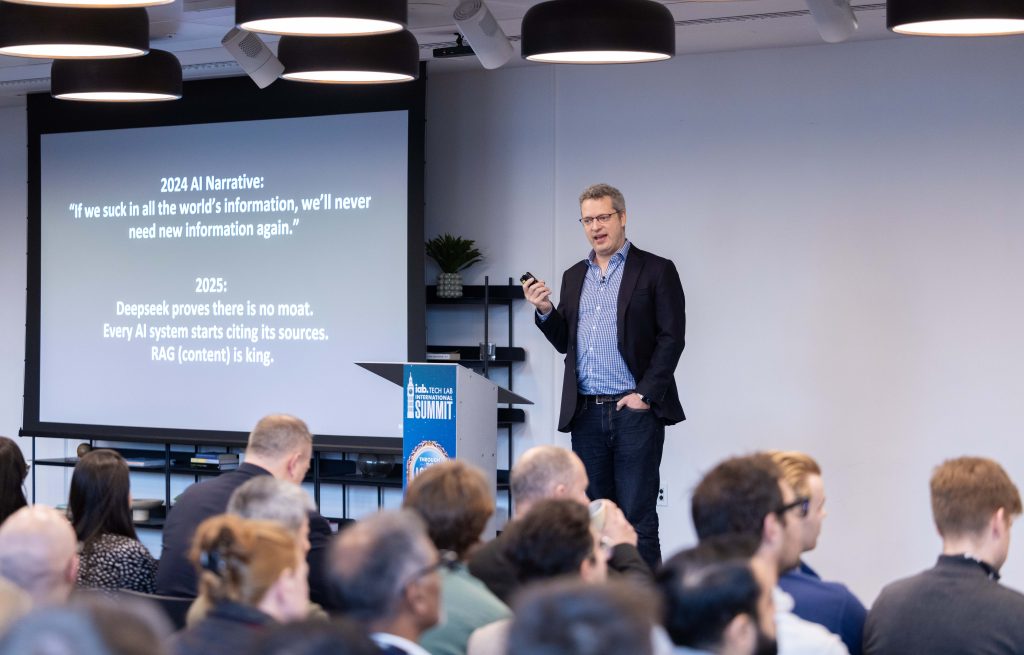
The challenges of publisher monetization when AI overviews and chatbots have reduced their traffic was a very hot topic throughout the day. The packed publisher AI roundtable featuring Jonathan Roberts from People Inc., Simon Wistow from Fastly, and Shailley Singh from IAB Tech Lab tackled one of the most urgent questions facing content creators: how do publishers monetize their content in the age of large language models?
Roberts articulated a critical perspective, building on his mainstage presentation earlier in the day: “AI with publishing is better than AI vs publishing” as both sides fundamentally need each other. This framing shifts the conversation from adversarial to collaborative, acknowledging that AI systems and content creators have a symbiotic relationship.
When it comes to Retrieval-Augmented Generation (RAG), the panel emphasized that content is king, but high-quality outcomes require high-quality content. The quality of what AI systems produce is directly tied to the quality of the content they’re trained on or retrieve from. This gives publishers leverage, but only if they can effectively protect and monetize their assets.
The panel dove into the immediate challenges publishers face, which are top of mind for the Content Monetization Protocols working group at Tech Lab:
- Identification: Publishers must take action on identifying which LLMs are scraping their content, and how often
- Measurement: Robust measurement is key for building up viable business models in the future, and demonstrating the value of the content and the scale of the LLM’s reliance on it
- Payment models: While Cost per Crawl may be the eventual “right” model, there is not enough measurement or tracking data for it to yet gain moment, but gaining revenue in shorter term agreements seems to be a popular current approach, while a true economic model is discussed
Roberts’ punchline, from his earlier presentation “Rebuilding the Information Economy for the Age of AI” landed with particular resonance: “Today there are many models to best fit your needs—but that’s probably not ‘take our stuff without paying for it.'” The message was clear – publishers need to assert control over how their content is used by AI systems. Without that quality content the value that LLMs deliver will decrease because there is no “magic content fairy”!
The session underscored that we’re in the early innings of figuring out LLM monetization. The technology has moved faster than the business models, and publishers are rightfully demanding a seat at the table as these new paradigms emerge.


Navigating GDPR and the IP Address Question
Rowena Lam from IAB Tech Lab led crucial conversations around privacy, taking attendees into GDPR (UK) territory and emphasizing that while AI dominates headlines, substantive attention to privacy and compliance remains essential to the industry’s foundation.
The summit wrapped with a privacy deep-dive featuring Fieldfisher’s Stephan Zimprich and Lam, tackling a surprisingly thorny question: What even is personal information? Specifically, the discussion focused on whether IP addresses will continue to constitute personal information in Europe in light of some recent rulings. The consensus? It probably still counts as personal information, but some organizations might decide to put up a fight given the complexity of case law and varying interpretations across European jurisdictions.
Cillian Kieran from Ethyca provided a sobering reality check that resonated throughout the venue. While he’d love to recommend sophisticated privacy tech stacks with advanced features, too many companies are still struggling with basic foundations. Before reaching for cutting-edge privacy-enhancing technologies, organizations need to get their fundamental data governance, consent management, and compliance processes right.
The message was clear: privacy isn’t a checkbox exercise or a nice-to-have feature. It’s foundational infrastructure that requires ongoing investment and attention. As regulations evolve and browser restrictions tighten, companies that haven’t built solid privacy foundations will find themselves increasingly constrained, and at risk of substantial fines.

Breaking Through Browser Barriers with Trusted Server
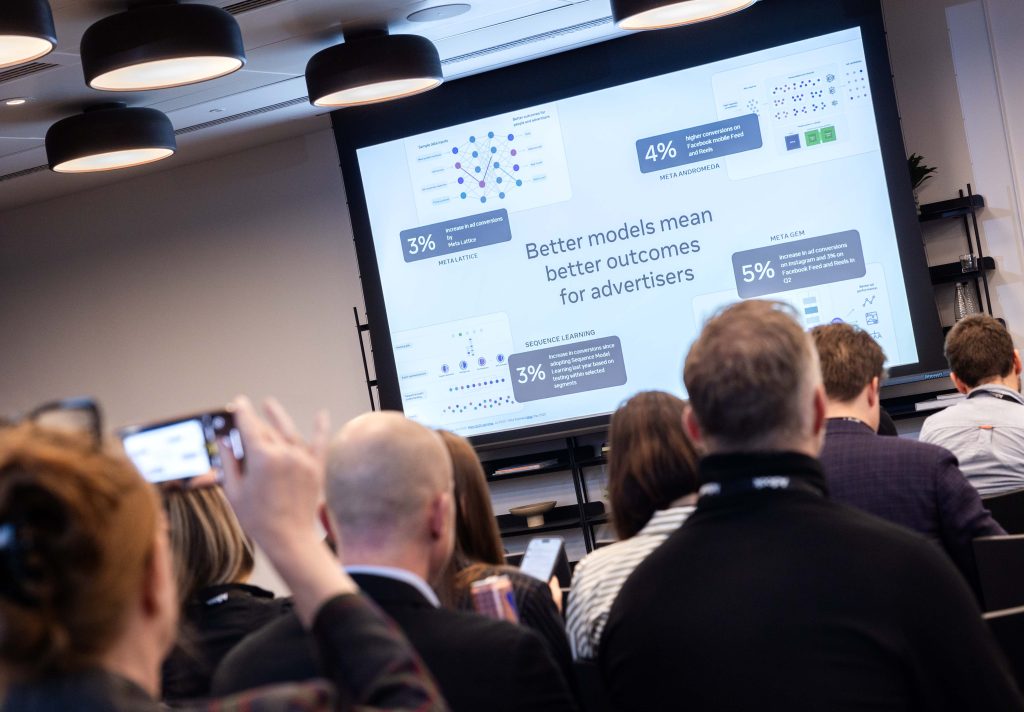
As browsers continue to restrict third-party tracking capabilities in the name of privacy, publishers and advertisers need alternative technical architectures that can maintain addressability and measurement without relying on deprecated technologies. The Trusted Server Initiative provides that architecture—a way to serve relevant ads, measure performance, and respect user privacy, all while working within the constraints of modern browser restrictions.
Jason Evans, IAB Tech Lab’s lead architect on the initiative, demonstrated the progress made since the launch in March 2025. The initiative can now serve ads from both Equativ and GAM into Safari despite Intelligent Tracking Prevention (ITP)—a breakthrough that addresses one of the industry’s most persistent challenges, thanks to ads being served safely in a first party context on the publisher’s pages.
The Trusted Server workshop went deep into the technical details, with Relevant Digital’s Ronny Linder, and Simon Wistow from Fastly, joining Evans, alongside Tech Lab’s Miguel Morales, and Shailley Singh. Together they discussed the roadmap, and how partners are already integrating with Trusted Server, demonstrating that the project being open-source is significant—it means any company can implement these solutions without proprietary lock-in, and a full solution can be brought to market quickly, with some publishers looking to start testing by January 2026.

The Future of Programmatic is Agentic
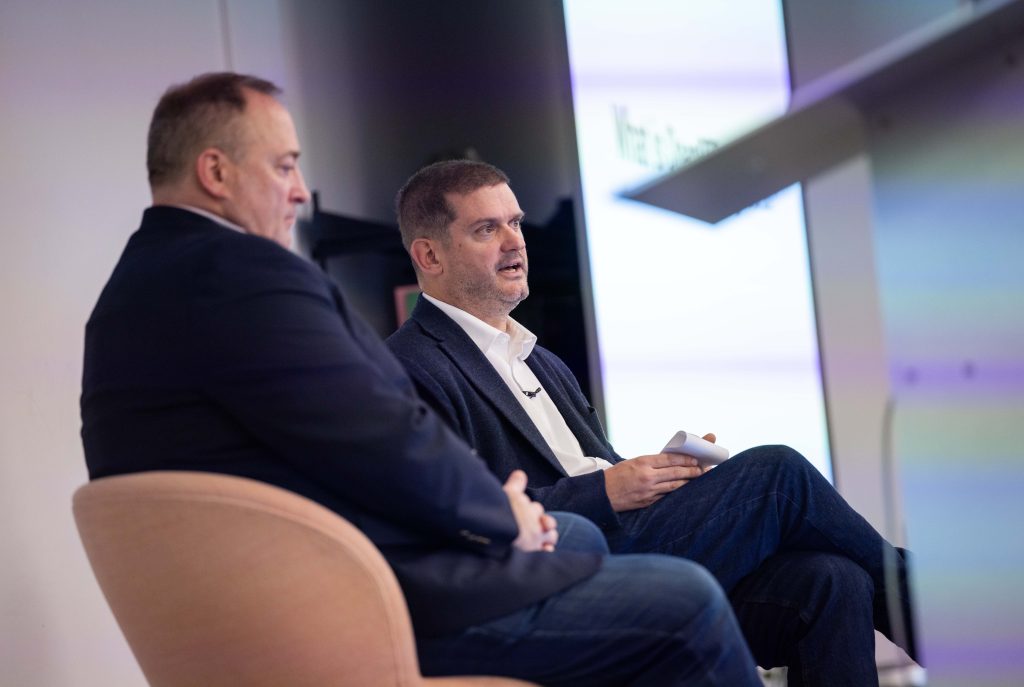
The future of programmatic advertising came into sharp focus through multiple lenses. From autonomous agents to auction transparency (and everything in between), Katsur’s fireside chat with Tech Lab’s Board Chair Dr. Neal Richter from Amazon explored how agentic AI can help bidding not only scale better but become more sustainable. They also discussed the increase in live event streaming and emphasized that while security remains one of the main challenges, initiatives like Device Attestation in OM SDK are helping combat fraud in real-time.
Miguel Morales from IAB Tech Lab and Joshua Prismon from Index Exchange delivered one of the summit’s most forward-looking sessions on the Agentic RTB Framework (ARTF). They explained how OpenRTB functions as a multi-party system orchestrating common goals—which is, quite literally, the definition of an agentic system.
One critical insight? Because OpenRTB provides a well-defined model and context, it will help prevent hallucination in AI agents operating within programmatic ecosystems. This is crucial—as autonomous AI agents begin making bidding decisions, optimizing campaigns, and managing budgets, they need structured frameworks to operate within. Without clear parameters and validation mechanisms, autonomous agents could make costly errors or behave unpredictably.
The Road Ahead
The IAB Tech Lab International Summit 2025 revealed an industry in transition, grappling with fundamental questions about identity, monetization, privacy, and automation. What emerged clearly is that these challenges are deeply interconnected—you can’t solve identity without addressing privacy, can’t build effective AI systems without quality content and proper compensation models, and can’t deploy autonomous agents without transparent, well-defined frameworks.
The solutions discussed in London—from CAPIs to Trusted Server architecture, from LLM monetization frameworks to agentic systems—represent the building blocks of digital advertising’s next chapter. Success will require continued collaboration across the ecosystem, with standards bodies like IAB Tech Lab playing a crucial convening role.
As one attendee noted, having an AI-focused event on the floor below felt appropriate. Artificial intelligence isn’t a parallel track to advertising—it’s woven throughout every conversation, every challenge, and every solution. The industry that emerges from this transformation will look different from what came before, but the fundamentals remain: connecting people with relevant messages in ways that respect their privacy and deliver value to all participants.

Barnaby Edwards
Sr Director, Product Marketing
IAB Tech Lab