Today: the pod carries everything. Streaming inherited the commercial break from broadcast, and with it a habit: put every ad in the pod. On most CTV services the entire ad load sits in a handful of two- to four minute interruptions. Viewers know exactly when the break starts, and that is the moment they reach for the remote, the phone, the next show- or simply leave the room.
Publishers have had two levers, fewer breaks or shorter ones, and both buy experience with revenue.
A 2024 FreeWheel study reported by eMarketer found that breaks placed at unnatural moments bothered 71% of viewers and cut brand recall by 14%, while programming with well-placed ads was rated as enjoyable as programming with none. The problem is not that ads exist. It is where they are stacked.
The moments that can take the load
A CTV session has seven places an ad can live, and the IAB Tech Lab CTV Ad Portfolio now defines the six outside the break.
Before and between viewing, home screen and menu ads place a tile or banner on the app’s rows. During playback, pause ads fill the screen while the viewer has stopped, contextual overlays take a corner or a lower third while the content keeps playing, L-bar and double-box squeezebacks shrink the picture rather than cover it, and in-scene ads put a billboard or poster inside the scene itself. The seventh place is the ad break: still there, just shorter.
The new balance: An ad break goes from the only standard to one of seven
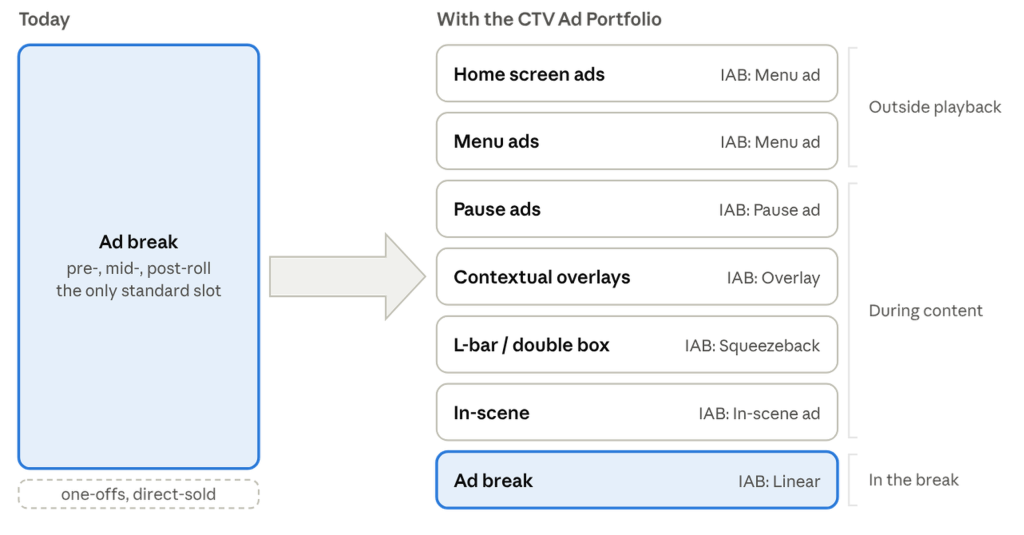
Moving load into those moments adds no interruption; it removes some. The breaks shrink, the session carries the rest, and because every format is now standardized, a buyer can plan across all seven moments in one campaign, the same way they buy the pod today.
The stoppage slot in practice
In the example below, a double box runs during an injury stoppage in a live match, the moment a full break would have sent viewers away.
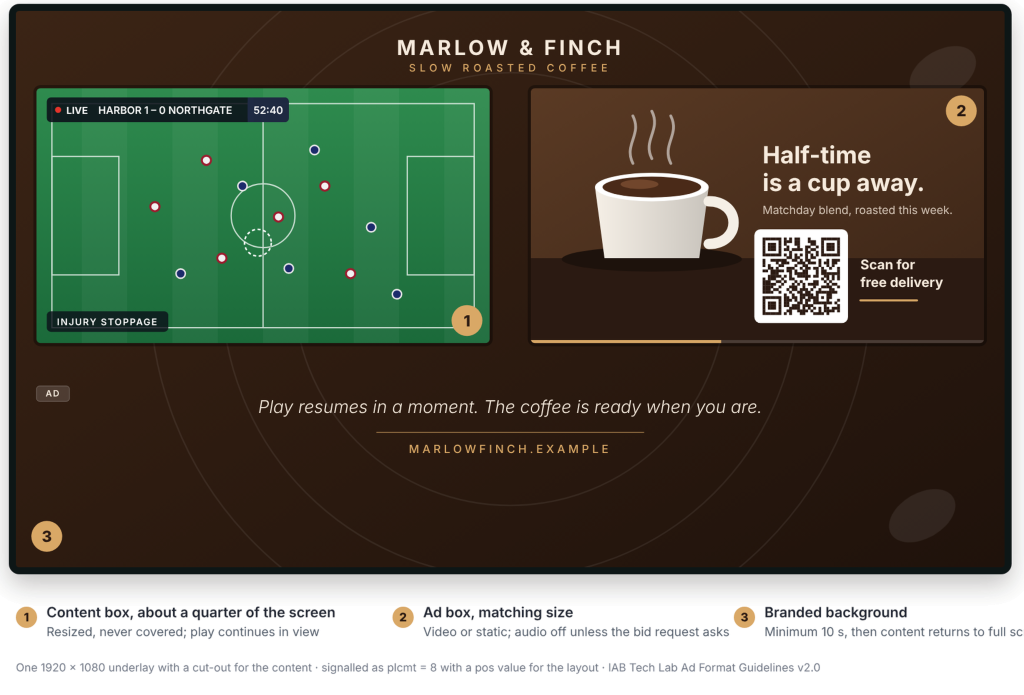
Content and ad each take about a quarter of the screen, side by side, and here the advertiser also brands the background between them. Sound stays off unless the publisher decides the stoppage is long enough for the ad to become the viewer’s focus. The slot, the layout and the sound rules are all defined in the IAB spec, so a buyer can book it like any other standard unit.
The standard defines the unit but the publisher defines the moment.
Rebalancing is not simply moving an impression from one slot to another. It gives publishers more than one revenue lever. They can use formats outside the break to shorten pods while preserving monetization, create controlled incremental supply around moments that previously carried no advertising value, or package particularly relevant moments as premium sponsorships.
How those moments are opened can vary with the content. Some are inherent to the format: a viewer pauses, enters a menu or leaves the device inactive. Other units can be activated manually by a live producer, at scheduled intervals, from production or event signals, or through AI-assisted detection of a timeout, replay, substitution or other natural events. In VOD, scene context, emotional sentiment, chapter markers and pre-identified transitions can play the same role.
These are not theoretical approaches. AI and video telemetry are already being used to identify contextual advertising opportunities in live sports, while manual and scheduled activation allow publishers to retain editorial control over when an experience appears.
Each method creates a different kind of supply. Time-based rules provide predictable volume. Manual activation preserves editorial judgment. Event- and scene-based triggers make the placement more contextual. Publishers can combine them, coordinate pacing and frequency across the session, and package the resulting inventory for direct sponsorships, programmatic demand or both.
The standard gives buyers and sellers a common way to describe and transact the unit. The publisher’s orchestration determines when that unit earns its place in the experience.
The goal is not to monetize every available second. It is to make more of the session monetizable without making more of it feel interrupted.
Ad load is a balance not a count
The ad break is not the problem; its monopoly is. A session with shorter pods and standard formats between them can carry the same load with fewer interruptions, and the IAB Tech Lab standards that make it sellable are already published. The publishers who treat ad load as a balance to set, not a count to cut, will be the ones whose breaks viewers stop leaving.

Aviram Sharon
CEO
InTheGame (ITG)