IAB Tech Lab’s I Want My CTV event in 2025, with the apt theme of Stream Big or Go Home, was not just full of energy, great industry representation, insightful discussions, and hard-earned milestones. It reminded me how far Advanced TV has come and how many challenges still lie ahead.
Before diving into the highlights, let me share a bit of context. My name is Brad Pipkin, and I recently joined IAB Tech Lab as Director of Product Management for Advanced TV. I’ve been helping digital video advertising reach critical mass for nearly twenty years, starting as the Global Product Specialist for DoubleClick’s online video product, Motif for In-Stream.
I found myself creating a few rudimentary XML schemas to control video ad logic within online publishers’ players because, frankly, there was no spec for that – yet. Fast forward to 2008, when I and the rest of the IAB’s Digital Video Committee published VAST 1.0, a standard that became foundational to the ecosystem we participate in today. Since then, I’ve had the opportunity to solve countless business and technical hurdles across the Advanced TV value chain through roles at BlackArrow, FreeWheel, EMX Digital, and Samsung Ads. But enough about me. You want your CTV!
The CTV Opportunity
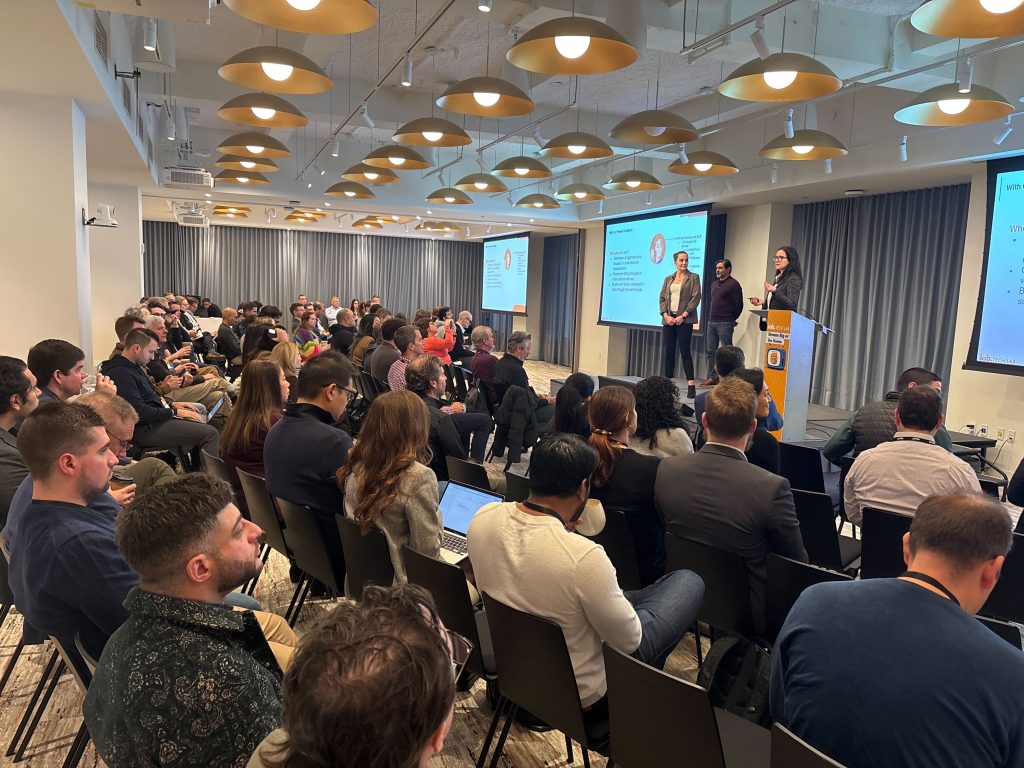
More than 130 industry leaders joined a day filled with technical depth and collaboration. References to Captain Planet, The Wizard of Oz, and even Frasier kept the tone light while underscoring a central truth: Connected TV is no longer an experiment. It is a mature marketplace thriving on cooperation and working towards even more in 2026.
Three themes stood out from the day
- CTV has entered its grow-up phase: Fragmentation remains, but collaboration now drives growth.
- Standards are the new creative engine: Specifications such as OpenRTB, Deals API, OM SDK, and CTV Ad Portfolio form the foundation for the next phase.
- Collaboration creates progress: Our working groups, commit groups, and public comment periods transform “wild west” ideas into industry standards ensuring there’s a spec for that!
The morning keynote reframed Connected TV as a collective construction project. The slides referenced Captain Planet’s mantra “With Our Powers Combined,” illustrating how OpenRTB, ACIF, Deals API, OM SDK and proposals for LEAP work together to improve scale, trust, and transparency.
Success in CTV depends on everyone building from the same blueprint. A strong open network requires consistent signaling and shared responsibility throughout the value chain.
Brad’s POV: There was so much energy and excitement at this event. It’s clear how invested everyone has been in these standards discussions and I can’t wait to be a part of these same celebrations at next year’s event!
CTV Ad Portfolio: Defining the Building Blocks
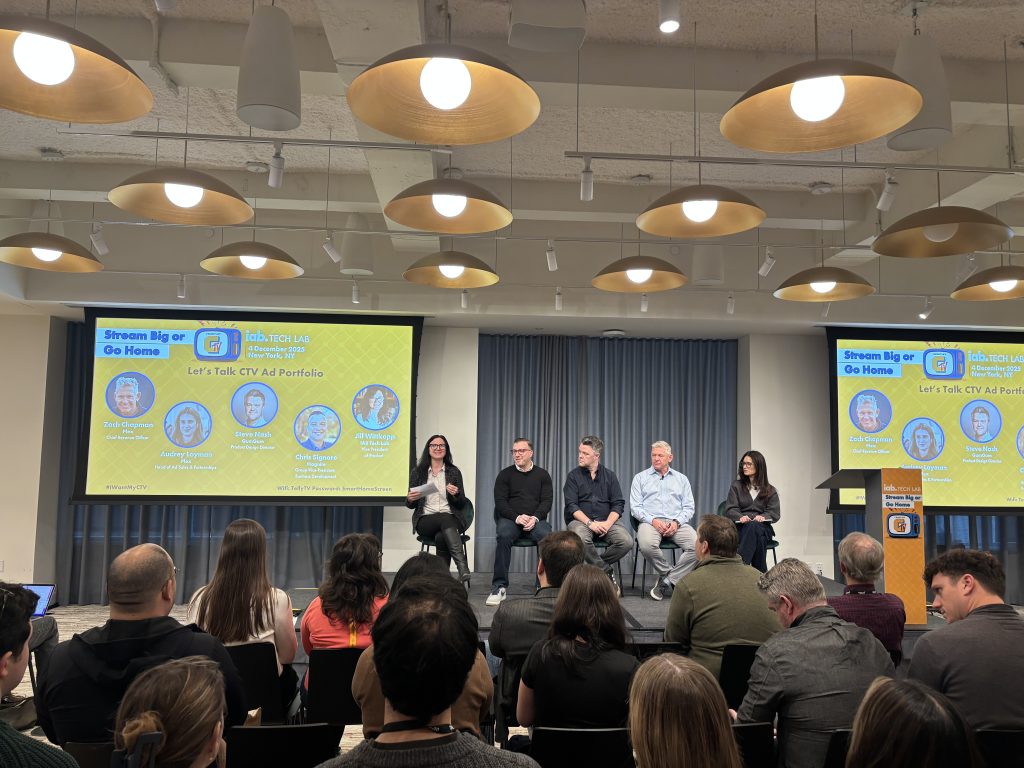
The session “Let’s Talk CTV Ad Portfolio” marked a milestone as the public comment period opened on December 11. Panelists from Plex, GumGum, and others agreed that naming and standardizing ad formats is key to scaling transactions across all CTV platforms.
Plex showcased its Home interface and Paired Sponsorships placements such as Nike-branded sports shelves leading to pre-rolls. Also highlighted was their ability to aggregate across multiple streaming platforms; something my household talks about often!
Overlay ads bring flexibility, pause ads create new inventory, and L-shaped squeeze-backs extend storytelling beside live content.
Paraphrasing Chris Signore of Magnite – Get the nomenclature right or deal with issues in execution.
Brad’s POV: While some of these formats have been around a while, standardizing their names, set up and transactional rules is critical to achieve true efficiency and scale. The Ad Format Hero working group will be discussing how to signal these formats through the bidstream so join in the conversation; I’d love to hear your thoughts.
Telly Us About Your New Ad Formats
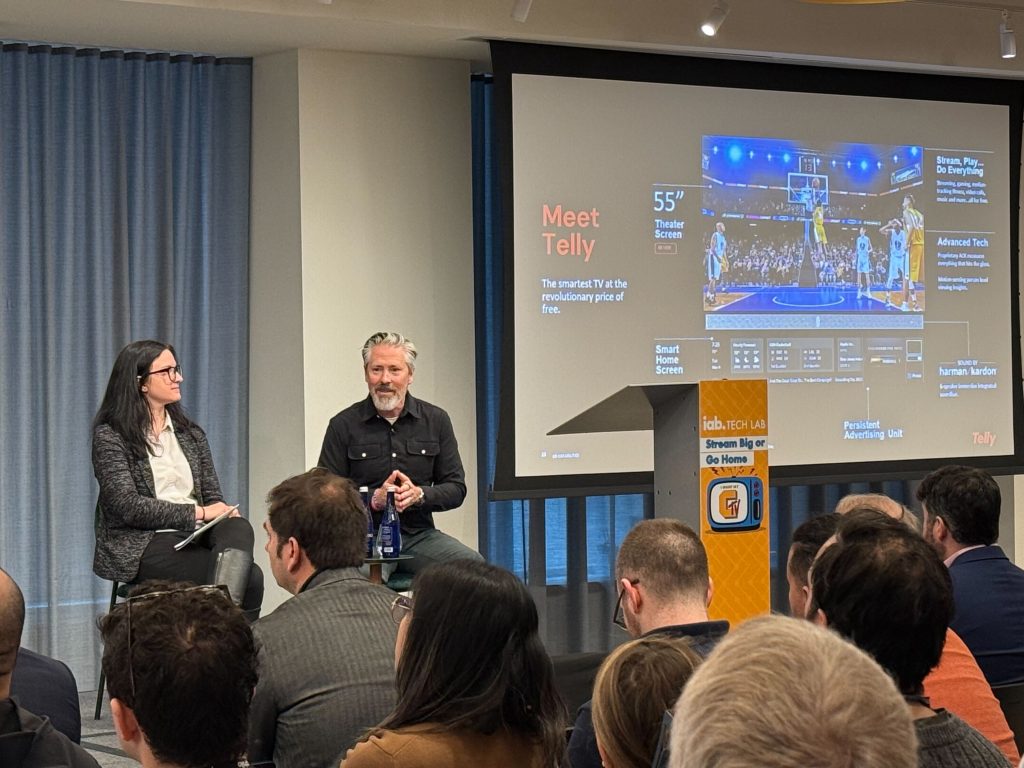
The session “New Ad Formats Reshaping Consumer Engagement” spotlighted Telly, the free television that includes an always-on secondary screen. CRO Mike Shehan described Telly as a reinvention of television itself—an entertainment hub, soundbar, and connected device in one—pointing out that with Telly and the new CTV Ad Portfolio, TV is “not just for instream anymore.”
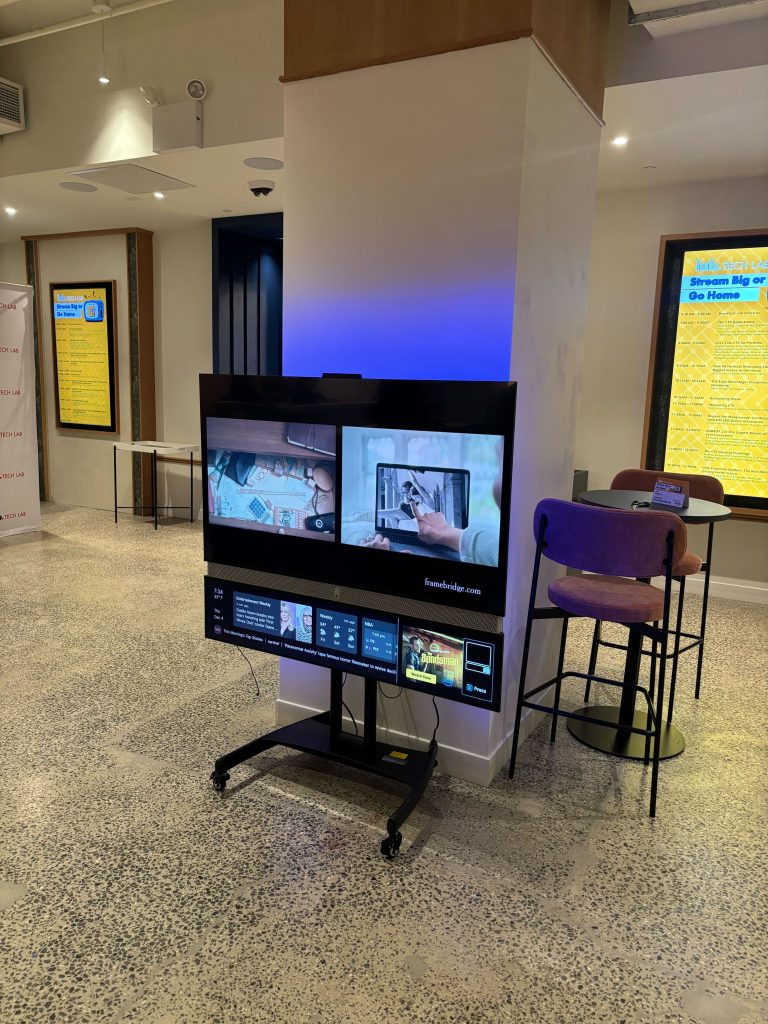
Telly’s dual-screen experience enables brands to combine unobtrusive ads with rich engagement, which embodies the use cases supported by the CTV Ad Portfolio, making them an ideal complement for the event, as they also had one of their free TVs on display. Pepsi’s synchronized companion creative was a popular example. Shehan predicted that within a year, Telly’s proprietary formats would be traded programmatically at scale, thanks to standardization.
The conversation made one thing clear: the future of CTV advertising will reward relevance and experience rather than interruption.
Brad’s POV: Telly is a truly unique CTV experience and I’m looking forward to incorporating their use cases as part of our Advanced TV initiatives.
The Challenges of Live Events
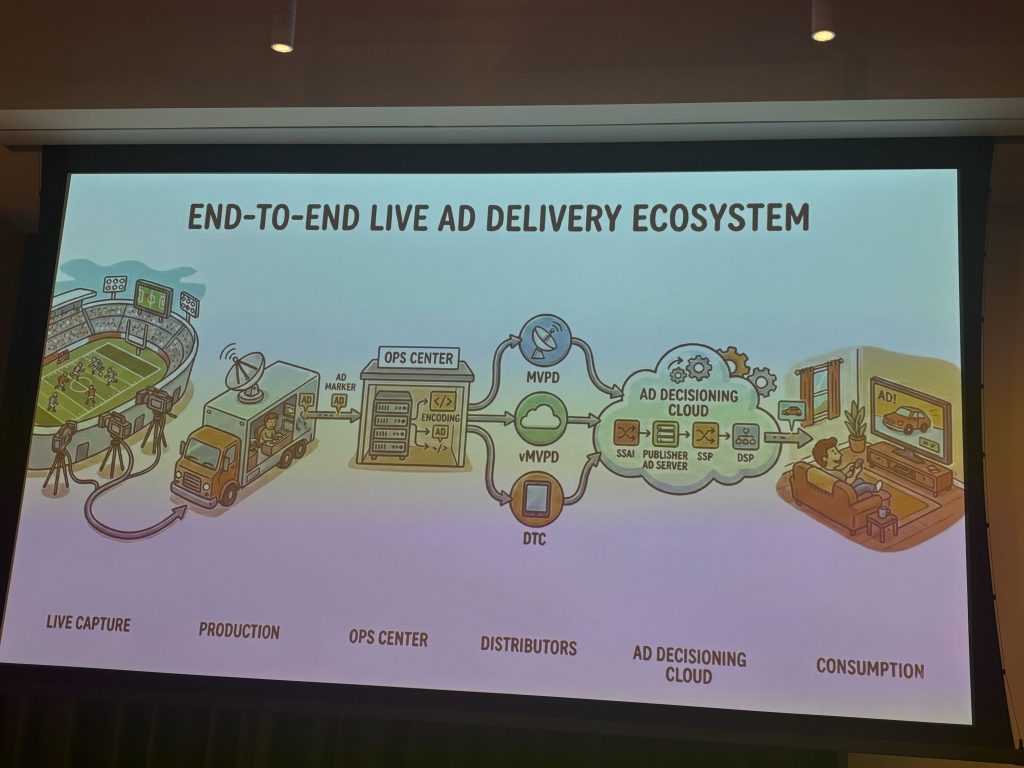
Few topics drew more empathy than the complexity of live events. Everyone recognized the tension between delivering flawless broadcasts and managing unpredictable viewer spikes.
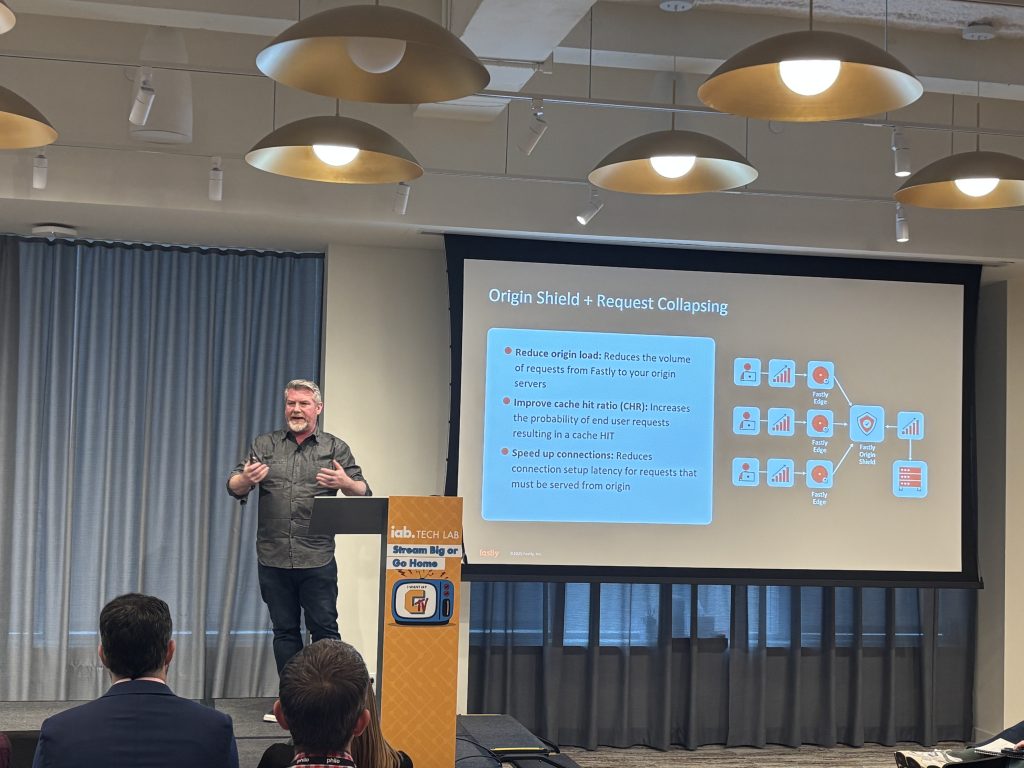
Simon Wistow, Co-Founder of Fastly, opened “The Edge Advantage: Economics and Future of Scalable Streaming” with humor and precision. Live events are difficult—network congestion and latency threaten every stream. Fastly’s edge computing model brings processing closer to viewers, reducing delay and cost. Features such as request collapsing, origin shielding, and dynamic manifest generation let platforms scale in real time.
That message carried through “Making Every Impression Count for CTV Live Events.” Chris White from Google noted the complicated infrastructures for live events can suffer from concurrency spikes creating downstream strain on bidding and pacing. Yet optimism prevailed. The Advanced TV community is building APIs like Concurrent Streams, Forecasting, and Deals API to better plan inventory before kickoff. Combined with edge delivery, these standards create a blueprint for reliable, scalable live viewing.
Brad’s POV: Live events will always be complex, but with smarter infrastructure and coordinated standards, the next era of streaming can be stable, profitable, and ready for anything. We just need your participation in the discussions to ensure your needs are addressed.
Live Events: Follow the Yellow Brick Road
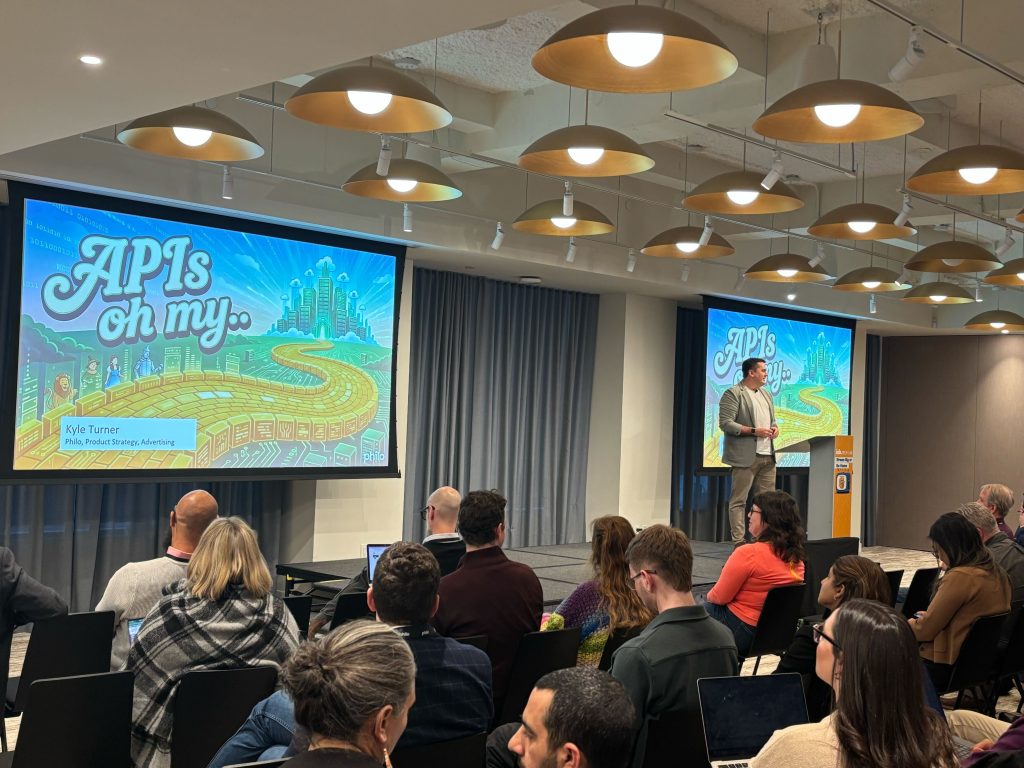
The afternoon session “APIs Oh My” carried a whimsical theme. Drawing from The Wizard of Oz, speakers likened the Tin Man’s heart to advance notice, the Lion’s courage to transparent deals, and the Scarecrow’s brain to live-stream data. Together they form the system of APIs that connect the ecosystem. These include the Deals API, Forecasting API, and Concurrent Streams API, which improve transparency and efficiency outside the bidstream.
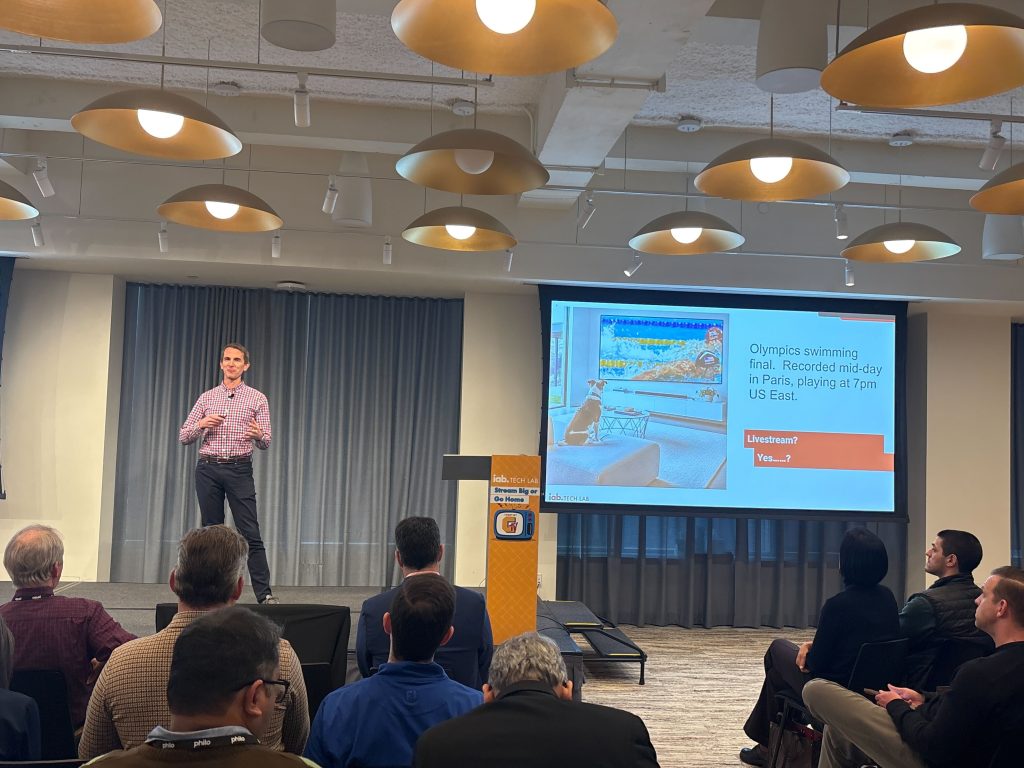
Later, Curt Larson of Equativ examined what “live” truly means in an age of FAST and time-shifted content which is an ongoing topic in our working groups. Taylor Ash of The Trade Desk noted that 90 percent of Olympic advertisers were net new to NBCU, proving that better metadata and programmatic for live events can unlock new budgets.
Brad’s POV: 2026 will be the year for standardization of live streaming event monetization. Thinking outside the bidstream and adoption of the resulting standards are essential to this success.
Signals of Truth: Measuring What’s Real in CTV
If connected TV promises precision, its success depends on verification. That theme unified “Measuring CTV” and “Beyond the Masquerade.”
In “Measuring CTV,” experts outlined why verifying ad exposure is difficult. Traditional web pixels were never meant for the living room, and device fragmentation compounds the challenge. The Open Measurement SDK (OM SDK) is closing that gap by standardizing how we confirm when an ad appears and whether the screen is active.
“Beyond the Masquerade” introduced Device Attestation in OM SDK v1.6, confirming that impressions come from genuine devices. Vinod Panicker of Amazon Ads described how cryptographic checks now protect Fire TV and Apple TV from being spoofed as invalid traffic. The urgency was clear after BADBOX 2.0, a botnet that infected more than ten million CTV devices worldwide.
Brad’s POV: Measurement integrity is now essential. By combining open standards with device-level authentication and broad adoption, the industry can transform fragmented data into a single, trusted signal. Transparency becomes the foundation of value, and trust finally becomes measurable.
What’s Next? – Collaborative TV
“I Want My CTV” captured a moment when connected television fully embraced its maturity. Standards are no longer abstract ideas; they are the infrastructure powering real business.
Jarred Wilichinsky, SVP of Global Ad Ops at Paramount, encouraged everyone across the value chain to participate in 2026—buyers, tech partners, sellers, and streaming platforms alike. The next chapter of Advanced TV will not be written by one company or one format but by a community that builds it together.
For more information about joining IAB Tech Lab’s Advanced TV Commit Group or contributing to our initiative, visit iabtechlab.com/advancedtv
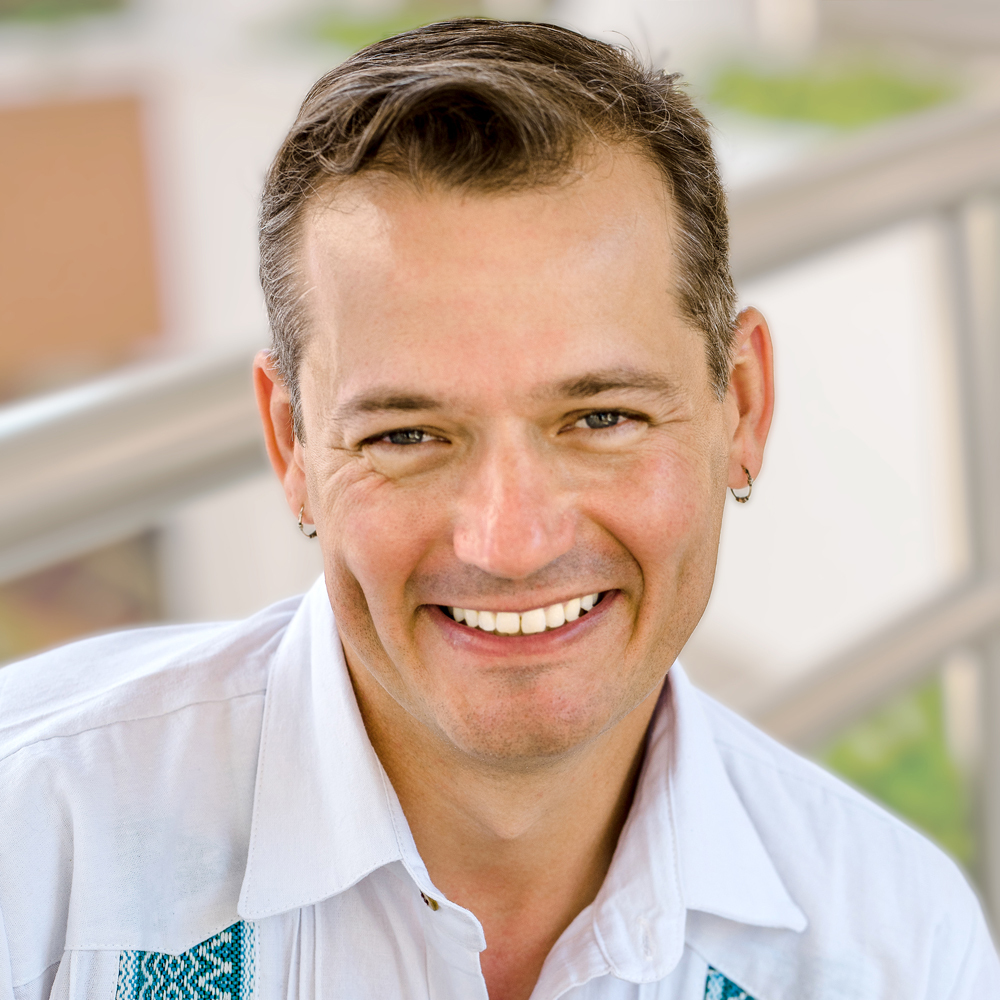
Brad Pipkin
Director, Product Management – Advanced TV
IAB Tech Lab