CTV is no longer an emerging advertising channel. It is a nearly $30 billion operating environment, and expectations have grown accordingly.
At IAB Tech Lab’s 2026 Ad Ops Workshop for Advanced TV, leaders from across the supply chain examined what those expectations mean in practice. The workshop followed the Ad Ops path from defining and transacting inventory to approving creative, preparing it for live and automated delivery, measuring outcomes, and preserving creative identity.
The common thread was simple: CTV has achieved scale. Now its operating infrastructure must mature to match it.
Scale Raises the Operating Bar
According to IAB’s 2026 Digital Video Ad Spend & Strategy Report, U.S. digital video advertising is projected to reach $81.9 billion in 2026, up 11% year over year and more than double its 2021 level. CTV alone is projected to reach approximately $29.3 billion.
That investment brings higher expectations. Buyers want television’s attention and storytelling combined with digital’s targeting, accountability, and control. Targeting is now the leading criterion buyers use when making TV and video investment decisions, ahead of content quality.
Gaps remain, including limited transparency, fragmented reach, conversion friction, and inconsistent information about audiences, placements, creative, and outcomes. Addressing them requires common signals that remain understandable throughout the transaction.
Six Formats Become a Portfolio
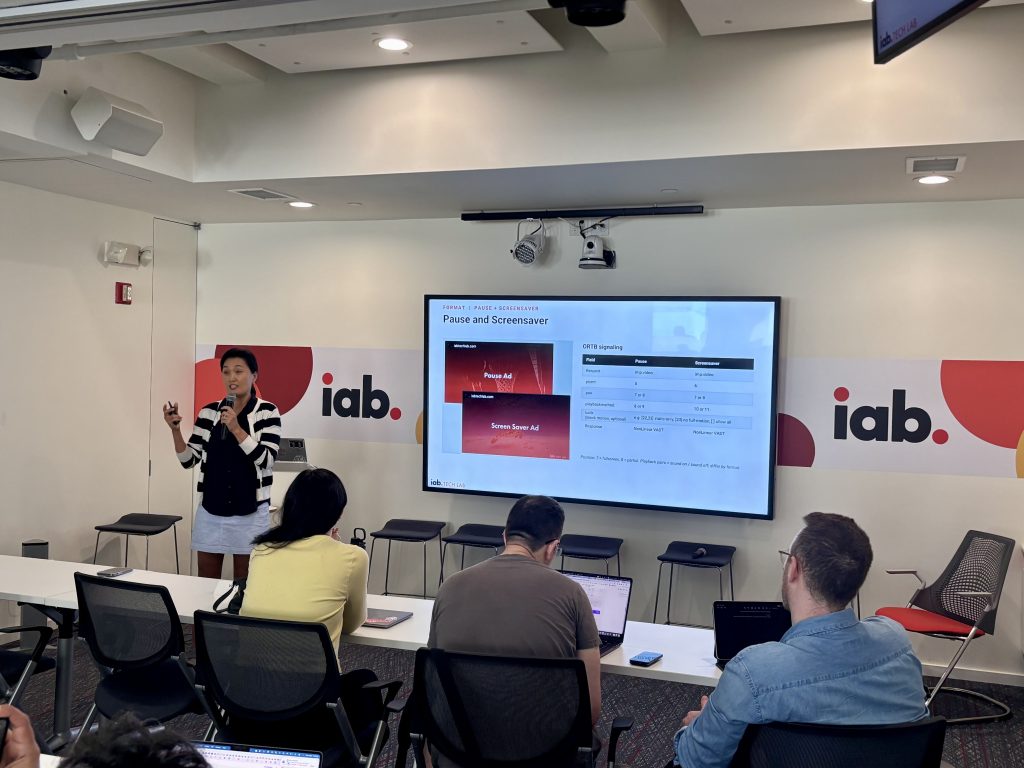
The workshop began with the finalized CTV Ad Portfolio Guidance and Signaling, covering Pause, Screensaver, Overlay, Squeezeback, In-Scene, and Menu or Home Screen ads.
Many already existed as individual publisher or platform products. The next stage is making them recognizable and transactable across the ecosystem.
The guidance establishes two delivery paths:
- Pause, Screensaver, Overlay, Squeezeback, and In-Scene inventory use the OpenRTB video object and VAST NonLinear Ads.
- Menu or Home Screen Ads use the Native API, with video creative delivered through embedded VAST.
Audience polling suggested that adoption is moving beyond passive interest. Of the attendees who responded, 58% said their organizations already support at least one portfolio format. Another 33% planned to add support to their roadmap or begin evaluating technical requirements. No respondents expected to simply monitor adoption without acting.
Pause Ads were the clearest entry point. When asked which format their organization was most likely to support first, 54% selected Pause Ads, followed by Menu or Home Screen Ads at 15%.
A format becomes a market only when buyers, sellers, platforms, and technology partners can execute it consistently. Common signaling is helping these formats make that transition.
Creative Approval and Validation Move Earlier
Standardizing inventory does not help if creative is still awaiting approval when a campaign should begin.
The Ad Management API provides a non-bidstream method for submitting creative to an exchange before it enters the auction. Instead of discovering a rejection through stalled delivery, the buyer receives a structured approval status and an actionable reason.
When asked what would accelerate adoption, publisher-level approval support led at 27%. More participating counterparties and consistent rejection reasons each received 18%, reinforcing that adoption depends on both functionality and network participation.
The Next-Gen VAST Tester demonstrated another important distinction: a VAST tag can comply with the specification and still fail in its intended environment.
The tester, built on the open-source VASTlint project, evaluates structural validity, environment compatibility, playback, and tracking behavior. It also supports the CTV Ad Portfolio and VAST 4.4 features.
Attendees saw immediate workflow applications. Thirty-six percent were most likely to add the tester to creative intake or pre-launch QA, while 27% selected automated workflow integration. Another 27% planned to evaluate it before changing their workflow. No respondents chose to simply continue using their existing tools.
For Ad Ops, the readiness test is broader:
Structurally valid + environment-compatible + successfully executed + observable
Validation should begin during creative intake and partner QA, not after a delivery failure or makegood.
Preparing Creative for Agents
Creative approval and VAST validation are only part of readiness.
During our discussion on Creative Readiness and Agentic Preparation, the room considered how readiness should be represented, who can declare it, and how much authority an automated agent should have.
A creative may be policy-approved but incompatible with a destination. It may be technically valid but not cached or prepared for a live event. Readiness therefore needs evidence, scope, authority, version, and expiration. It cannot be reduced to one permanent “approved” flag.
The audience drew a clear boundary around agent autonomy. Half supported allowing an agent to apply technical fixes with human approval. Another 21% would allow approved classes of fixes to happen automatically, while 21% preferred agents to recommend corrections.
No one supported allowing an agent to modify creative content within a defined policy. At least for now, the room appeared more comfortable automating preparation than creative decision-making.
Machine-readable policies, bounded permissions, actionable errors, safe fallbacks, and audit trails can help expand automation without surrendering control.
Live Events Leave Little Time to Recover
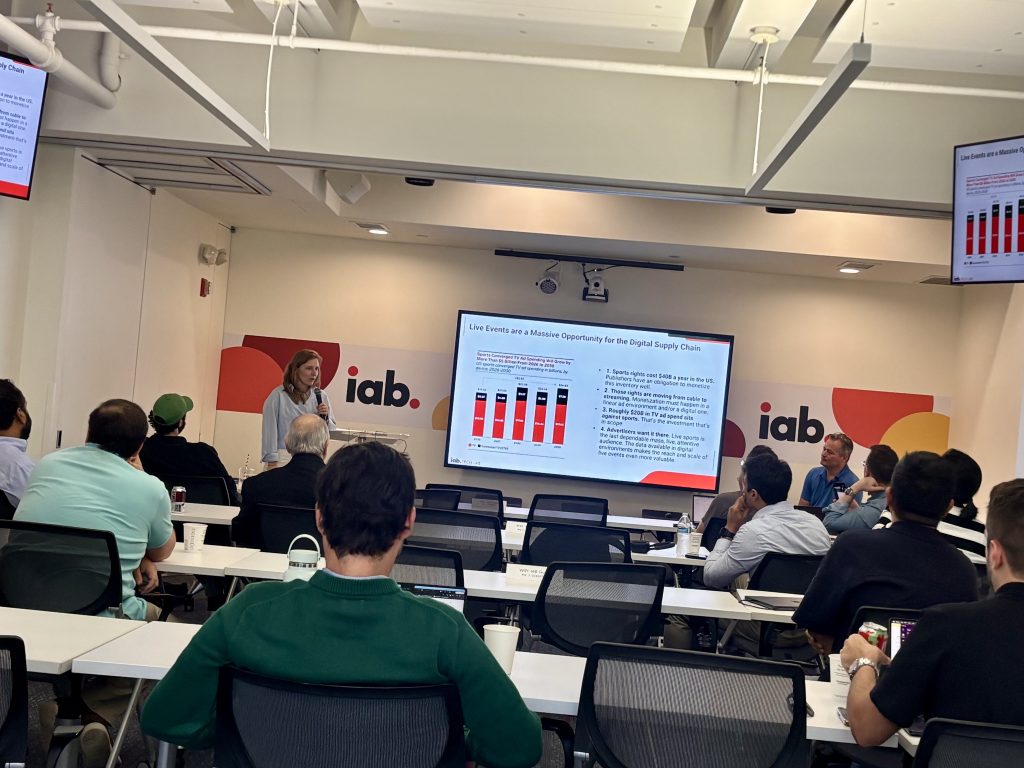
Live content is among CTV’s most valuable inventory. The spend report found that 93% of buyers consider it more valuable than other digital video, yet one-third still question whether the premium produces sufficient return.
Live delivery compresses forecasting, traffic planning, creative preparation, decisioning, and infrastructure scaling into an unforgiving window. A game may go into overtime, an audience may arrive faster than systems can scale, or an unscheduled break may create valuable supply without time for manual intervention.
Tech Lab’s Live Event Ad Playbook, or LEAP, addresses these conditions through structured forecasting, liveness signaling, concurrent-stream information, creative readiness, prefetching, bid caching, and contingency workflows.
When asked which capability they were most likely to implement first, 46% chose structured event and inventory forecasting, while 38% selected standardized live-inventory signals. Creative readiness and approval checks followed at 15%.
The results suggest a natural sequence: establish a shared view of what is scheduled and upcoming, identify live inventory, and coordinate the systems needed to deliver it.
Connecting Outcomes and Identity
Mature operations also require connecting what ran with what happened afterward.
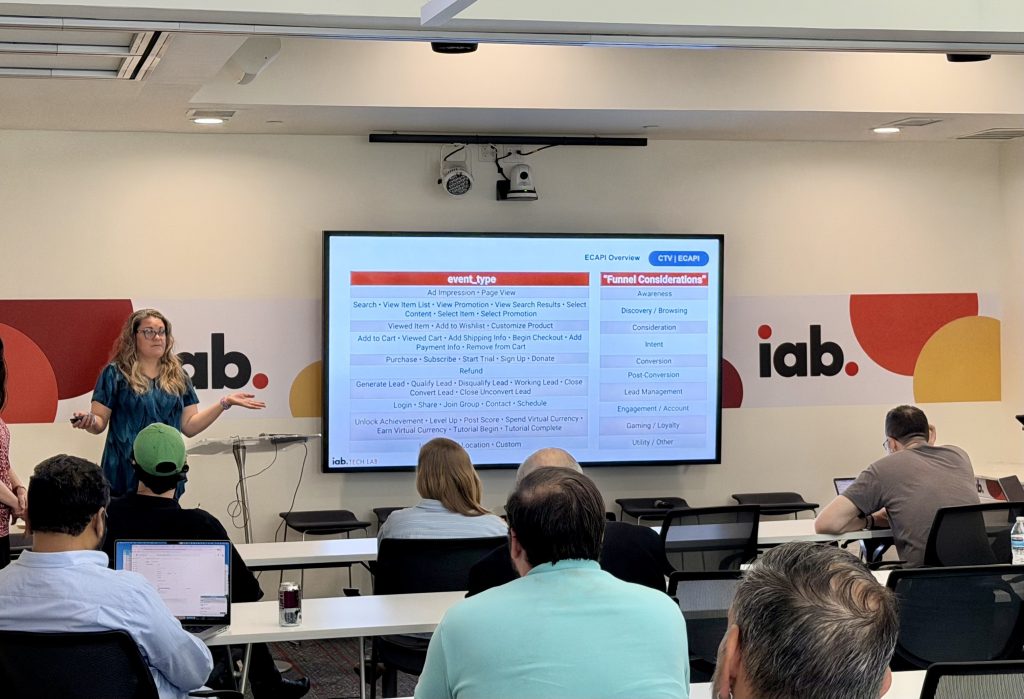
ECAPI, the Events and Conversion API, provides a common server-to-server framework for sharing marketing events with platforms and publishers. For CTV, it can connect exposure on the television screen with actions that occur later on another device or in a physical location.
The audience did not identify technical integration as the primary obstacle. Instead, 45% selected access to advertiser event data as the biggest barrier, which is surprising because several advertisers already offer it. The hardest ECAPI work may be organizational rather than technical.
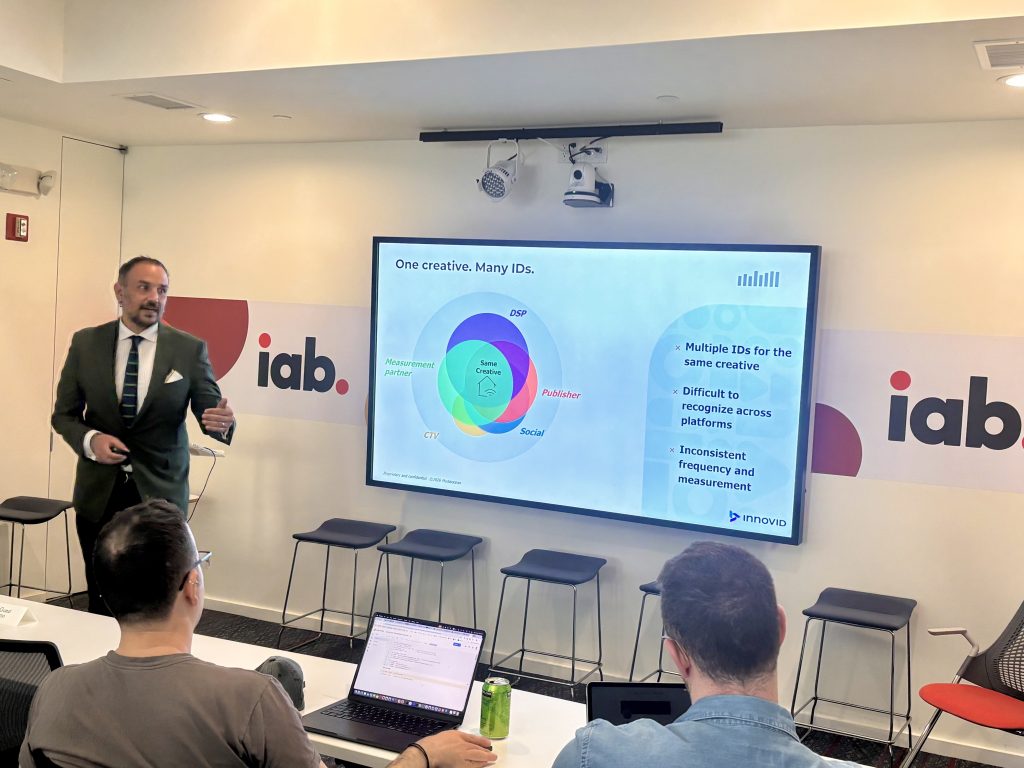
Persistent creative identity presents a similar coordination challenge. The Ad Creative ID Framework (ACIF) and UniversalAdID help the same creative remain recognizable across platforms and transactions.
When asked what would motivate their organizations to require a valid UniversalAdID, buyer or advertiser demand and better frequency and separation controls led at 33% each. Publisher or marketplace requirements followed at 17%.
The results reinforce that creative identity must solve visible business problems. Better frequency management, reduced ad fatigue, improved reconciliation, and more reliable automation provide that practical value.
Implementation Is the Next Stage
These audience polls were small and directional, not a broad industry benchmark. Even so, they revealed a consistent pattern.
Attendees were interested in adopting new capabilities, but they wanted clear implementation paths, stronger partner participation, explicit governance, and demonstrable business value.
Publishing a specification is not the finish line. A standard creates value when it becomes part of real products and workflows, and when partners can rely on one another to interpret it consistently.
CTV has moved beyond proving that it can attract audiences and advertising investment. The task now is to make its capabilities repeatable, transparent, measurable, and dependable at scale.
We will continue that conversation at I Want My CTV 2026: Streaming Grows Up on November 12 in New York City. The industry has reached a new stage of maturity, and maturity brings greater expectations.
Now it is time to build the operating infrastructure that meets them.

Brad Pipkin
Director of Product, Advanced TV
IAB Tech Lab