
On May 28, nearly 400 people packed a sold-out house of publishers, agencies, brands, platforms, technologists, and innovators to talk about the hottest topic of 2026 (and 2025, and probably 2027!): “Agentic AI”. Tech Lab Summit 2026: Welcome to the Agentic Web was a full-day exploration of how AI agents are reshaping the internet, digital advertising, content distribution, identity, privacy, and monetization.
The message throughout the day was clear: the industry is no longer preparing for an agentic future. It is actively building it.
From conversations with the man who invented the World Wide Web to demonstrations of emerging standards, agentic workflows, privacy infrastructure, audience frameworks, and new monetization models, Summit attendees examined what happens when the web evolves from human-to-machine interactions into machine-to-machine ecosystems operating on behalf of humans.
From Logic to Agents and What Comes Next
IAB Tech Lab CEO Anthony Katsur opened the Summit with a history lesson, tracing more than 70 years of AI development—from Alan Turing and the logic era, through the machine learning that brought us Google PageRank, DoubleClick, and Yahoo’s ad auctions, to today’s emergence of autonomous agents. The evolution highlighted a critical point: AI is not new to digital advertising. Automation, optimization, and machine learning have long been foundational to this ecosystem.
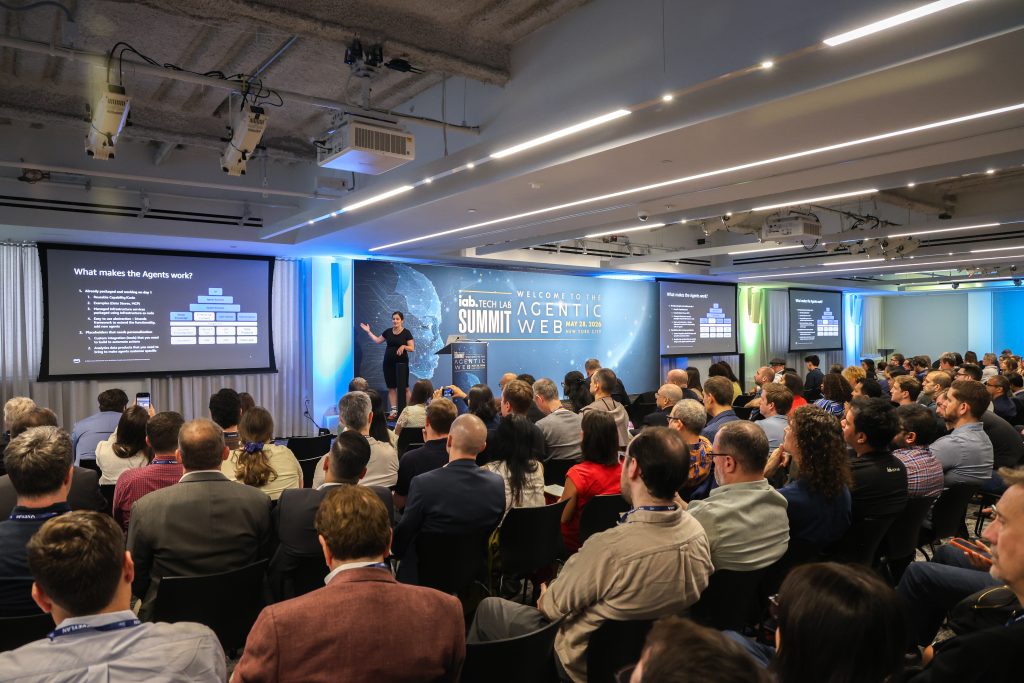
What’s new is the ability for these systems to not only analyze and recommend but to act. This shift from assistants that answer questions to agents that execute tasks could change the entire web. Exactly what that meant laid the foundation for the conversations that followed throughout the day, beginning with the man who invented the World Wide Web, Sir Tim Berners-Lee.
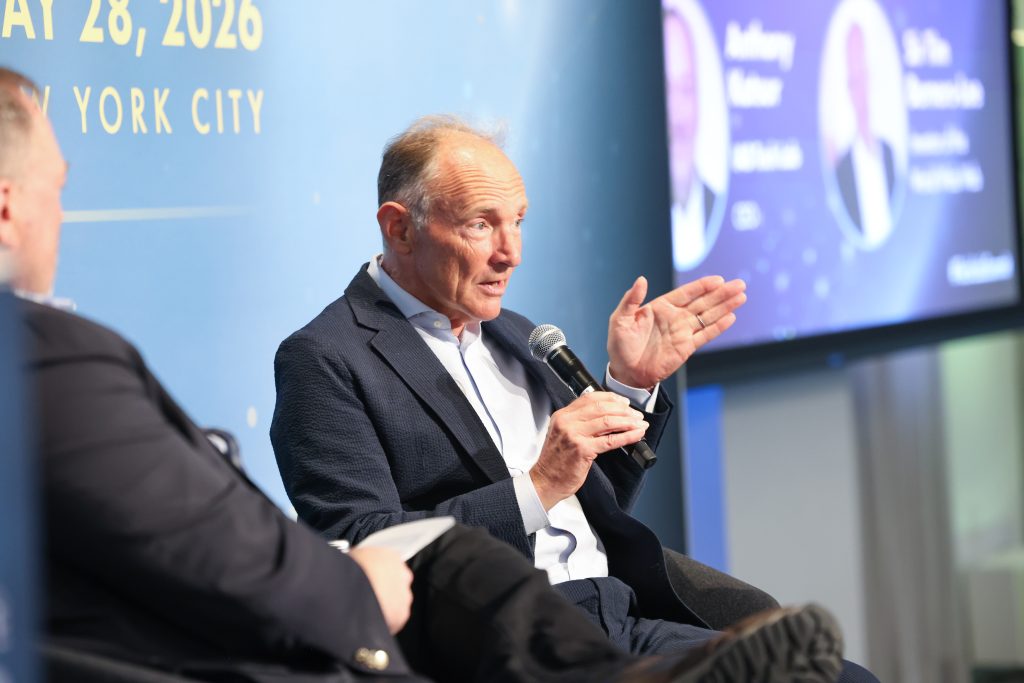
Sir Tim was warmly welcomed by the Tech Lab Summit audience, many of whom owe their careers to his invention. Katsur noted that few people could make him nervous, but this was one who absolutely did.
In their fireside chat, one of the central questions that came up was whether humans will continue to visit websites in a world increasingly mediated by AI agents, and it seems that there is no easy answer.
While agents may increasingly handle routine discovery and information retrieval, Berners-Lee emphasized that people will continue seeking experiences rich with creativity, music, poetry, art, and human expression. Attention and intent remain valuable. Human curiosity remains irreplaceable.
Berners-Lee also reinforced a theme that would echo throughout the day: individuals must maintain control of their own data. Referencing initiatives such as SOLID and the concept of personal “Pods” of data, Berners-Lee challenged the industry to build systems where consumers, rather than the platforms and agents, have complete control over access, permissions, and identity while ensuring AI serves human interests rather than replacing them.
Building Agentic Infrastructure for Advertising
Throughout the day, attendees got to see what leaders in the industry are actually building. Much of that work is focused on infrastructure.
Stephanie Layser from AWS showcased how buyers and sellers can begin testing agentic workflows today using agents built on the Tech Lab AAMP framework that can discover inventory, create media plans, and facilitate deal creation. Agents for Advertising is ready to deploy, and will help the ecosystem test and build workflows—a critical first step for companies that are often strapped for resources. The team even generated a workflow live on stage, offering attendees a glimpse into how advertising operations may increasingly be configured through natural language rather than manual setup.
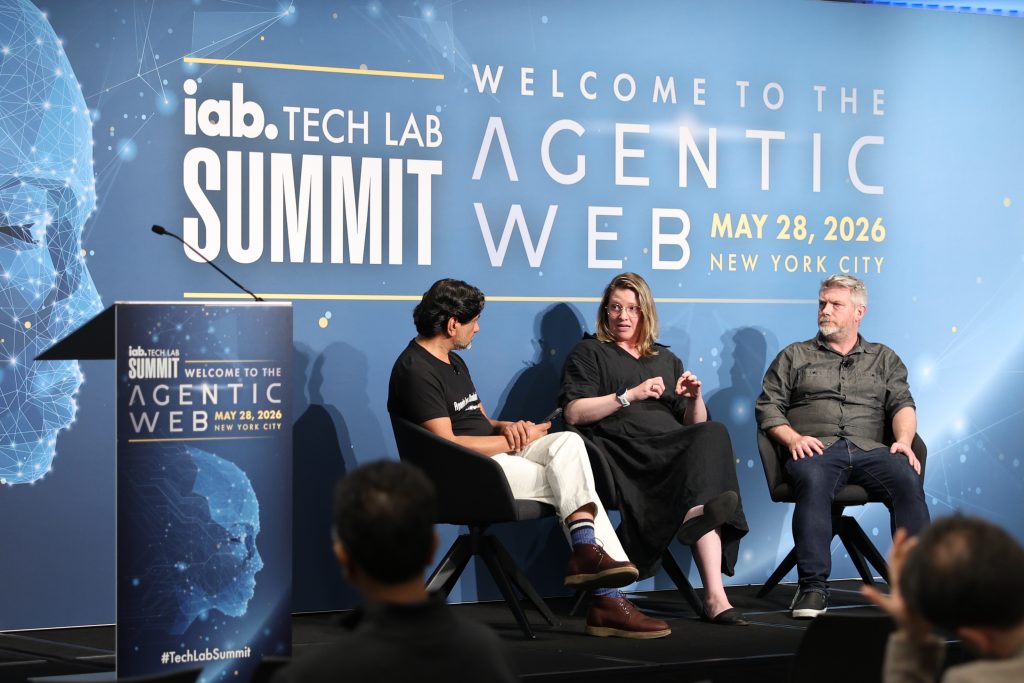
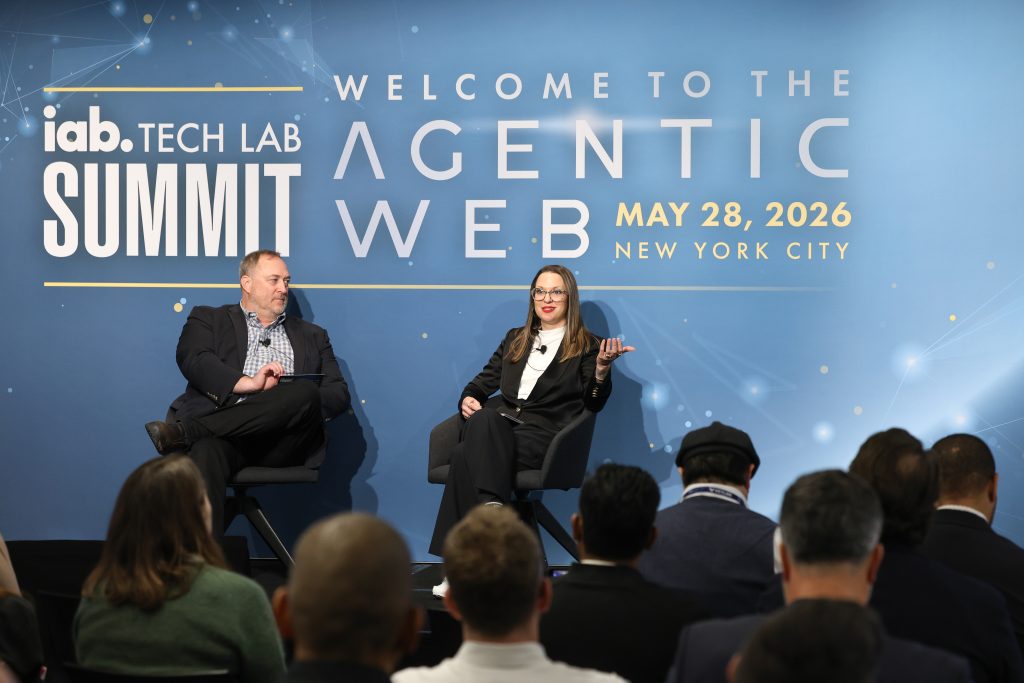
Agentic systems also promise significant workflow transformation, as evidenced by a theme that continued throughout the day: advertising systems that were once siloed are beginning to connect through shared protocols. Snowflake’s Eric Batscha and dentsu’s Rebekah Shalit discussed how client teams often spend 20–30% of their time on campaign setup and operational tasks. Automating those processes through agentic workflows could allow teams to focus more on strategy, creativity, and business outcomes.
Other agency leaders agreed. Both OMD’s Ben Hovaness and WPP Media’s Lauren Wetzel focused on how agentic technologies can help address fragmentation, improve interoperability, and create more effective collaboration between agencies, publishers, and platforms. Wetzel noted that the collaboration between agencies and publishers was critical, as publishers are the intelligence partner that will help establish the right value exchange.
In conversation with Katsur, Marika Roque of Kerv emphasized the ability of agents to synthesize all the data produced by the ecosystem into intelligence. There is so much of this data, and so much data exhaust, that this layer overwhelms most teams and companies. Agentic technology democratizes this data and makes it usable. However, this can only happen with interoperable handshakes between systems. Roque called on Tech Lab to continue to build on existing standards to unlock this value in agentic advertising.
There was general agreement throughout the day that if done right, agentic will bring about better decision-making and more intelligent marketing. For both buyers and sellers, that’s the real value of the automation that agentic technologies promise to provide.
Publishers Confront the Agentic Economy
Perhaps nowhere are the implications of AI and agentic more immediate than for publishers and content owners.
INMA’s Gabriel Dorosz outlined how AI-driven experiences are already disrupting traditional publisher traffic patterns while simultaneously being integrated into newsroom operations and business workflows. This sea change is leading news-focused publishers to completely rethink their businesses and to innovate the advertising experience. Dorosz reported that those that do are winning.
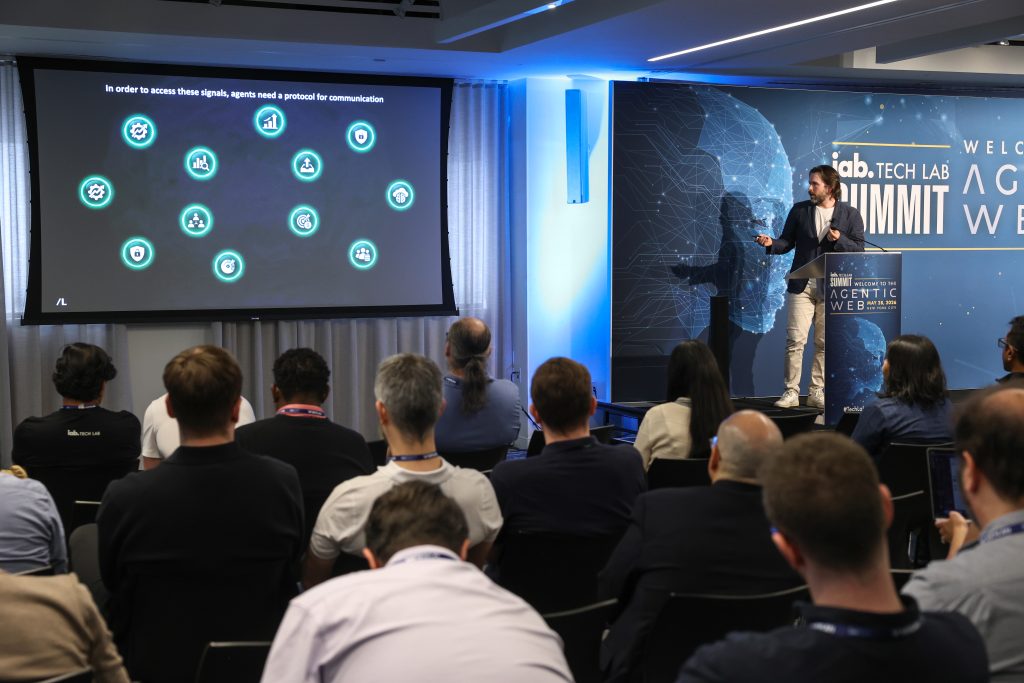
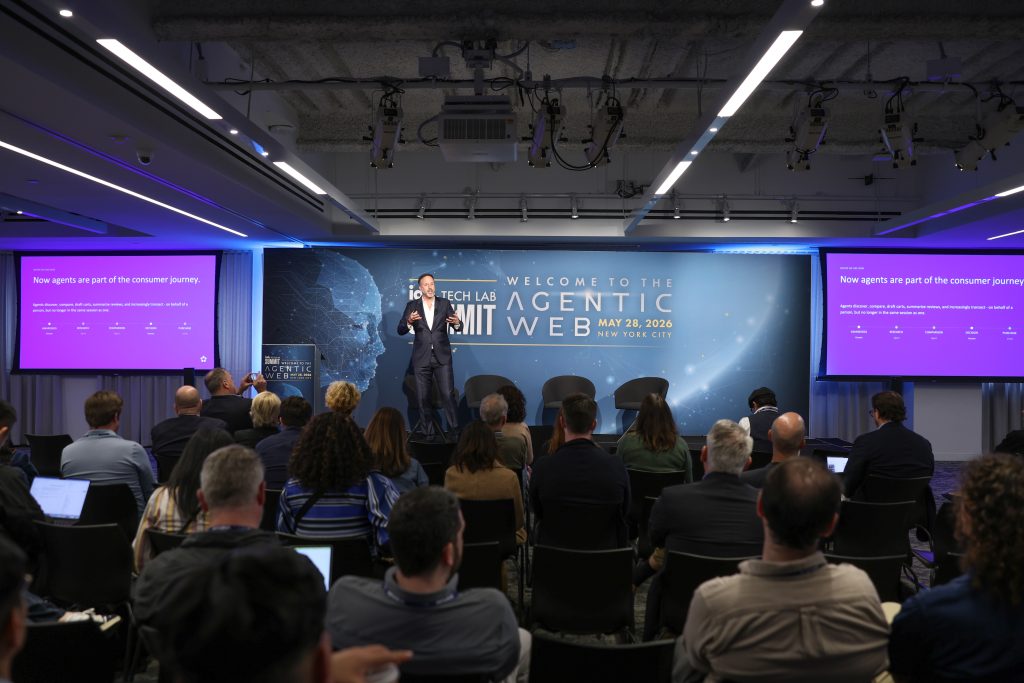
Discussions around AI scraping and content rights and monetization took center stage throughout the second half of the day. Supertab’s Joe Varvara highlighted that the percentage of web traffic from non-human sources continues to grow, as does token use. But AI bots need quality content to be valuable, as Perplexity also acknowledged earlier in the day. Agents consume significantly more computational resources than humans, yet economic models for compensating content creators remain underdeveloped. Varvara argued that the first step is transparency, to understand how the content is accessed and used, so that a marketplace can start to develop.
Tech Lab’s COO Shailley Singh hosted a conversation with Fastly’s Simon Wistow and People Inc.’s Lindsay Van Kirk that examined how organizations are shifting from blocklists to allowlists and implementing increasingly sophisticated methods for managing automated traffic. People Inc. shared the striking statistic that they are now blocking over 30,000 user agents from accessing their content.
New infrastructure approaches—including usage-based commerce models and emerging protocols such as CoMP—are attempting to address that imbalance by creating mechanisms for AI systems to compensate content owners when consuming their content.
The implications are profound: the web is rapidly transitioning from human-first traffic patterns to bot-first interactions, and the economic systems that support the open web must evolve alongside that transition.
What Comes Next?
Tech Lab Summit 2026 demonstrated that the Agentic Web is no longer theoretical. The infrastructure is being tested. The workflows are being automated. The business models are being challenged. And the standards that Katsur called out as essential are being developed. The ecosystem is actively working to shape what comes next.
In closing, we have to remember that none of this happens without our amazing sponsors. Thank you to Kerv, Meta, Optable, Permutive, The Trade Desk, Coactive, Didomi, Ethyca, Fastly, ID5, LiveRamp, Mobian, Ogury, Supertab, Zeroma, Adops.com, Arcspan, Human, Lemma, and Veylan.
We look forward to continuing the conversations started at Summit and to building the future. Together. Join us in the Agentic Task Force to be part of it.

Barnaby Edwards
Sr Director, Product Marketing
IAB Tech Lab