Agentic advertising can look like magic. You give an AI agent a goal, let it evaluate options, and watch a campaign come together. But it’s really a lot more complex than that. There are complex workflows and handoffs that need to occur, and while an agent or a few agents can automate the tasks, they need a common vocabulary to ensure that they are communicating consistently, or the magic will not make anyone happy.
The real opportunity in agentic advertising goes beyond making existing transactions faster with automation. That opportunity is expanding what buyers and sellers can consider, compare, and accomplish beyond what humans alone can accomplish.
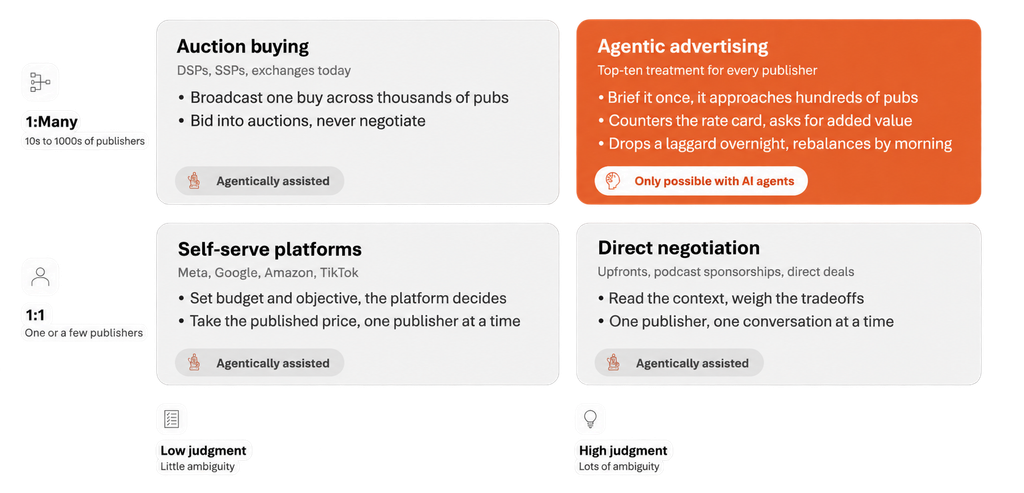
That is where AAMP 3.0 and OpenProposal matter.
The Biggest Constraint Is Time
Today, a media team at an agency or brand may have time to evaluate proposals from 10 or 20 publishers for a single campaign. Meanwhile, hundreds or even thousands of others may never even see the brief. Publishers themselves are similarly resource-constrained and have to choose which RFPs they have the bandwidth to respond to. Even then, some of those responses may not be perfect matches to the brief, even if they are close enough to be a fit.
This is not a problem with the quality of human work, but rather a bandwidth challenge.
Buyers can miss valuable inventory, and publishers can miss relevant demand. The result is that media plans can sometimes depend too heavily on familiar relationships and last year’s choices. That means unrealized revenue, limited competition, and strategies that do not always reach the full market.

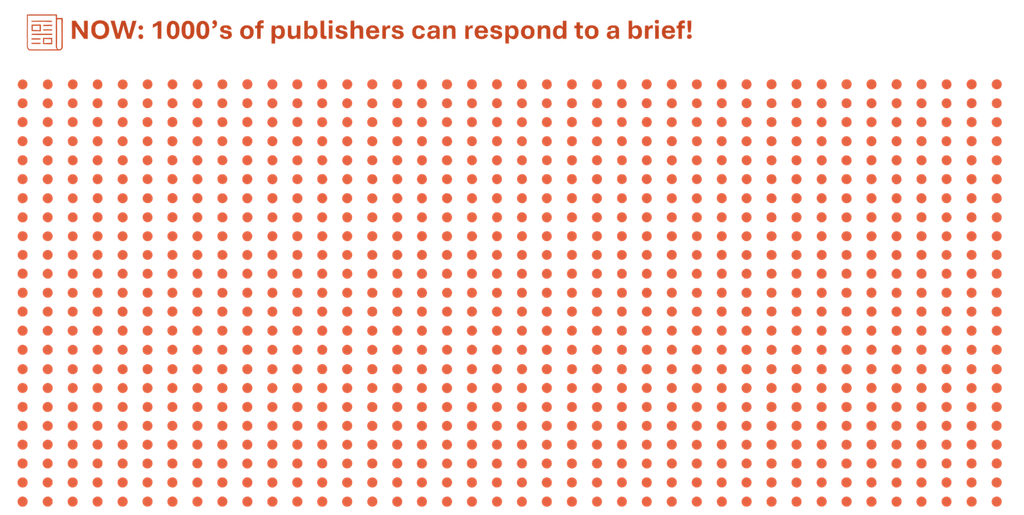
Agents can review far more options than a human team ever could, which is what makes them so powerful. But scale alone is not enough. The seller agents need a consistent way to understand what the buyer’s objectives are and then determine which inventory available across the various channels in which they operate best matches those objectives.
OpenProposal Creates the Shared Language for Opportunity
OpenProposal is the new specification at the center of AAMP 3.0. It defines what is being bought and sold in a format agents can understand and act on at machine speed.
A proposal can describe its contents, audience, commercial terms, guarantees, execution requirements, transaction eligibility, and settlement references. It can represent a standard package or a custom response to a brief.
That structure matters because a proposal is more than an available impression or a price. A buyer also needs to know whether it meets campaign requirements, supports the right measurement, avoids prohibited adjacency, and can be executed as promised.
OpenProposal gives agents the information needed to assess those questions consistently. The specification contains eleven headers across four key categories:
- Merchandising: Identity and Lifecycle, Agent Comprehension, Inventory composition, Audience reach, and Creative Requirements
- Optimization: Targeting Envelope
- Commitment: Commercial Terms, Guarantees, Transaction Eligibility
- Reconciliation: Executive, Settlement Reference
The specification is designed to be transaction-type-agnostic, and so it can support Direct IOs, Linear GRPs, and CPPs, Programmatic Guaranteed, Preferred Deals, and open auction. It is also channel agnostic, with planning and buyer enabled across open web display, CTV, mobile apps, audio, OOH, linear TV, and the walled gardens.
OpenProposal sits on top of established IAB Tech Lab standards, which have been extended to support all of these different types of deals. The combination of AdCOM, OpenDirect, the Deals API, and the Content, Audience, and Ad Product taxonomies provide a common foundation for agentic workflows to move from discovery and planning through negotiation, buying, execution, and reporting with a common language that ensures consistency in their behavior.
With AAMP 3.0 and OpenProposal Everyone Sees Better Outcomes
With OpenProposal as part of the agentic advertising workflow there is opportunity for every part of the ecosystem to benefit.
- For publishers, OpenProposal creates the opportunity to be considered for more briefs without manually responding to every one. That can expose differentiated inventory, audiences, and creative ideas to buyers who might never discover them today.
- For agencies, it allows strategy to be applied across a much larger field of options. Teams can spend less time reconciling documents, spreadsheets, emails, and platform data—and more time setting strategy, reviewing recommendations, and applying judgment.
- For advertisers, it can produce media plans in which every proposed line item more clearly answers the brief. That creates a stronger connection between business objectives and media investment.
This shift is bigger than just efficiency, although all stakeholders in an agentic ecosystem benefit from agents automating tasks so that humans can focus on the strategic work that moves the needle.
By extending agentic advertising to the beginning of the campaign lifecycle and by connecting planning with buying and execution, AAMP 3.0 and OpenProposal, building on the trust and transparency that has already been built into the Agent SDKs and the Registry, enable not simply faster advertising but a more open, scalable, and accountable marketplace for the ecosystem.

Barnaby Edwards
Sr Director, Product Marketing
IAB Tech Lab